
AI4Youth Stakeholders Conference: Young people and public policies for a more inclusive AI
On 21 May, we held the AI4Youth Stakeholders Conference, a key event to bring together policy makers, youth organisations and education professionals with a common goal: to define public policies that put youth at the centre of the development of artificial intelligence.
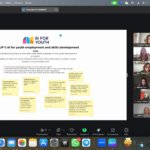
During the conference, the policy recommendations of the AI4Youth project were presented, followed by intensive group work on three priority areas:
- AI for youth employment and skills development.
- AI for digital inclusion and accessibility
- AI policy implementation and stakeholder collaboration
Each group discussed challenges and proposed concrete measures to ensure that AI is used ethically, inclusively and with positive impact on young people’s lives. Practical tools and real cases that are already making a difference were also shared.
The event concluded with the viewing of the policy recommendation videos and a closing space where learnings and next steps were highlighted.

Read the policy recommendations here:
Boosting Technical and Digital Literacy:
Increase digital and technical literacy among young people so that they can understand and actively participate in the use of AI. Skills such as critical thinking and emotional intelligence are also needed. A solid understanding of AI enables young people to protect their rights and exercise their autonomy.
Upskilling and Lifelong Learning:
Rapid technological change requires young people to update their skills throughout their working lives. We need accessible retraining programmes with institutional and social partner support, especially in contexts of job losses caused by automation. This right to lifelong learning must be backed by a European strategy with an inclusive approach.
Dialogue for Effective and Just Policies:
Policies on AI, employment, and education should actively integrate the voices of young people, especially those in vulnerable situations. Including their perspective can improve the fairness and effectiveness of decisions. This requires institutional training in youth participation and the use of deliberative methods.
Protecting Stakeholder Dialogue:
The introduction of AI challenges traditional mechanisms of labour representation. It is crucial to strengthen the role of trade unions, cooperatives and youth organisations to guarantee labour rights in increasingly digitalised environments. Social dialogue must adapt and be supported by data-driven narratives and cooperation with civil society.
Tackling Risks of Surveillance and Psychosocial Harms:
The use of AI in education and employment can lead to forms of surveillance and psychosocial harm that affect young people’s mental health and autonomy. We propose reviewing occupational safety regulations to address these risks. External ethical assessments should also be implemented and the right to disconnect established.
Promoting development and deployment of complementary AI:
Innovation driven solely by the market tends to prioritise automation, neglecting technologies that complement human work. We propose investing in the development of AI that enhances educational and work experience through public policies and funds such as Horizon Europe. This needs to be communicated as a form of pro-human innovation.